
Introduction
A couple of years ago, whilst packing away camping gear in a much-loved field on the Llyn peninsular, I was having a rather disjointed conversation with a friend about decisions his brother was having to make in re-locating from New York to Germany. One of his dilemmas was what to do with the proceeds of the sale of some real estate in the former, whilst he set himself up in the latter.
‘Where do you think he should invest the proceeds?’ my friend asked as he walked past carrying a couple of camping chairs.
Without pausing in my task of cleaning a gas barbecue, and without any thought, I replied, ‘China’!
My friend laughed and I did too at the joke.
On reflection, long after the barbeque had been cleaned and put away in its bag, I realised that this wasn’t a joke at all, my response had been immediate and emphatic – and I knew I hadn’t been playing for laughs! So why had I been so clear in my thinking?
It has been obvious for some time that China is ‘the next big thing’, if indeed it isn’t already. I knew that its industrial capacity was outstripping a rapidly de-industrialising West and that its economic GDP, in terms of purchasing power parity, (1) has become greater than that of the post World War 2 superpower and global hegemon the United States of America (US).
I also knew that China has been viewed as a growing threat to the US’s global dominance (economic and political) as encapsulated in Brzezinski’s ‘The Grand Chessboard: American Primacy and its Geostrategic Imperatives’ (1997). Furthermore, this theme of threat has been developed through numerous US government and large corporation funded Think Tanks, such as The Rand Corporation and The Brookings Institution (2). These ideas have become a corner stone of US foreign policy, resulting in Obama’s ‘pivot towards China’; the subsequent imposition of sanctions to try and arrest its economic development and the promotion of proxy wars to try and isolate it from its allies.
In January 2023 I posted a blog entitled ‘Is the US running out of luncheon vouchers?’ – which included a review and critique of a film by the now late John Pilger, who posited (naively in my view) that The West’s misunderstanding of China’s intentions was a root cause of the growing tensions between it and the US. The film quoted US military experts stating that to have any chance of defeating China, the US (and its allies) would need to fight it before 2025.
Well, that date has been and gone, and it seems that the US may have concluded that it cannot defeat China solely through direct military confrontation. It has therefore focussed its efforts back to the imposition of sanctions, proxy wars to weaken its allies (eg Russia and Iran) and attempted political capture (regime change) to destabilise them and subsequently China itself.
Despite this grasp of geopolitical currents, I have been aware for some time that my understanding of how China operates and the impact that its current iteration is having and will have on global matters is extremely thin. Moreover, and worryingly, that which I do know is almost entirely through the lens of western ideology – which can, in my view, be increasingly categorised as ‘propaganda’. Given that we are told that China is a growing threat to the ‘Liberal West’, and a threat that must be addressed (once Russia is exhausted), it seems to me that some knowledge that is not weaponised to support this view would be both timely and helpful before it all kicks off (if it hasn’t already done so through the continual attacks on Iran and the US attempt to control global energy supplies).
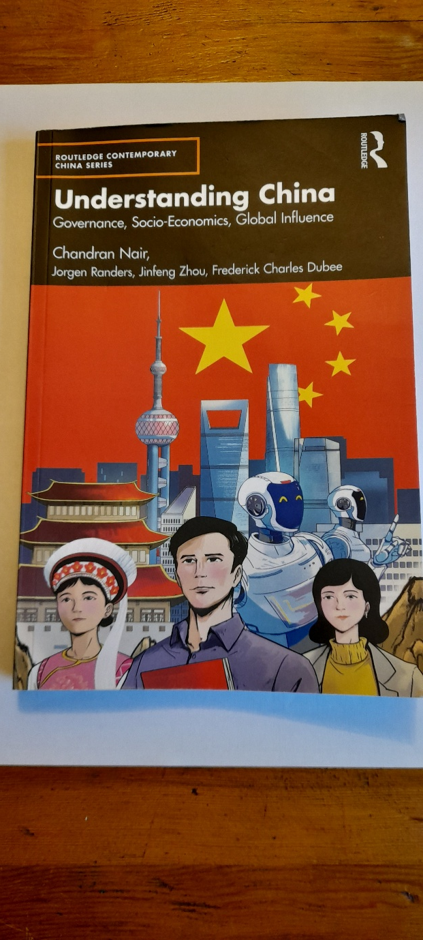
Recently I saw Chandran Nair (CEO of the Global Institute for Tomorrow, a thinktank based in Hong Kong) talking on a podcast about the transformation he had witnessed in China over the past four decades. He argued for a better understanding in the West about what this comprises and its global implications. Handily, he and three others have just published a book entitled ‘Understanding China – Governance, Socioeconomics, Global Influence.’
The book was expensive (£44 paperback through October Books, Portswood High Street) and only 150 pages long – and many of these were taken up with extensive referencing, indices etc. I was a little disappointed …… until I began reading what is a very dense text that is full of stats and written in a style that reminded me of soviet era documents. The silver lining of ‘smallness’ immediately became apparent!
Summarised – so that you don’t have to read it – this a big post for onthebrynk , just short of 6,000 words – but there again China is a big country with a big population! I have endeavoured to arrange information around key themes, some of which arise naturally from the book, others which I think will be of particular interest to what I expect to be a sceptical western audience: The Economy; System of Governance; Politics & Policies; Corruption; Human Rights; Foreign Policy; and Military Power.
I have tried to reflect as accurately as possible the key facts and arguments posited by the book, keeping my comments (of which there are many!) to footnotes – apart from in the conclusion.
So, here we go, starting with the first three paragraphs of the Foreword written by Zhang Weiwei, Dean, China Institute, Fudan University (Shanghai):
‘China has emerged as the world’s largest economy in terms of purchasing power parity, achieving a remarkable ascent from its historically low economic base to global pre-eminence. It is now the world’s largest industrial, manufacturing and trading nation, with the world’s largest middle class. Extreme poverty has been completely eradicated, and life expectancy is currently two years more than in the United States. With a speed of accomplishing almost one industrial revolution every decade since the early 1980s, China is now at the forefront of the Fourth Industrial Revolution with big data, artificial intelligence (AI), and quantum technologies. It is now the only country still capable of providing goods, services, and experience which spans the four Industrial Revolutions to the whole world. All of this has changed the global landscape and the framework of the existing global order.
Yet the narratives shaping global perceptions of China are still distilled through narrow media frames, usually with a Western ideological bias. They reduce China’s governance model to such labels as “authoritarian” or “abuse of human rights”. China’s dynamic approach to technological innovation, climate change, and social-economic transformation is often framed through a lens of suspicion rather than analysis, ignoring its unique blend of meritocratic policymaking, adaptive governance, long term strategic thinking, rather than the short-termism so prevalent in the West today.
Furthering such perceptions has a high cost, as they fuel geopolitical tensions, trade wars, stifle climate cooperation and exacerbate military brinkmanship. They also hinder people-to-people trust, discourage cross-cultural exchanges and undermine global solutions to shared challenges.’
The Economy
The standout thing about modern China is its economy and Nair et al provide a wealth of information and statistics about it. Growing from around 1.6% of the world’s GDP (PPP) in the mid-1980s to 18.7% in 2023, with average annual growth rate during this period of 10%, it is now the largest economy in the world.
This has been achieved through the transformation of what was a Maoist planned economy to a hybrid one, comprising state funded and driven sectors plus private investment. Crucially the Chinese State has, and still does, maintain a tight overview grip on economic activity and the structures that underpin it. Reforms have been gradual and closely monitored, often trialled in small scale initiatives before being more generally rolled out through the wider economy.
Extraordinary productivity gains (equivalent to 50% of output growth) have resulted from:
1) A series of market reforms instigated from 1990 onwards eg:
– Stimulating competition through small producers being enabled to retain surplus profits.
– Decentralising economic governance in order to reduce excess bureaucracy and state interference.
– Liberalisation of internal capital markets making funding for businesses easier to access.
2) Qualitative improvements in human capital (labour) eg:
– Improving education, health care, housing and sanitation.
– Raising average living standards (and the eradication of ‘extreme poverty’).
– Skills development to harness the benefits of technological research and development and to offset the gradual loss of economic comparative advantage from previous era low labour costs (wages).
-The impact of large numbers of Chinese students educated in foreign universities returning on graduation to use their skills and qualifications in their home country.
3) Huge state investment in infrastructure (1990s – 2000s 9% of GDP), resulting in a massive and sustained boost to the overall economy (aided by the ‘multiplier effect’ (3)), an increase in the flexible use of factors of production – labour, raw materials etc and supply of goods to markets eg:
– The expansion of the rail network to 159,000 km linking cities, coast and countryside, plus 45,000 km of high-speed railway.
4) Investment in developing cutting edge technology (2.59% of GDP spent on research) eg:
– Quantum computing, advanced robotics, digital infrastructure, AI and renewable energy.
Although this has been a remarkable success, a significant component of the economy’s transformation has been the increase in heavy industry – and with it massive environmental pollution. Lacking as it does any significant reserves of oil or gas, China has been historically reliant on coal as its primary source of power and between 2006 and 2019 it emitted 25% of the world’s greenhouse gases (cf 11% by the US). However, context, as ever, is all – this represents 10.1 tonnes per capita cf 17.6 tonnes per capita in a largely de-industrialised US during this period.
From 2010, channelling Confucian tenets of ‘thrift’ and ‘non wastage,’ China has introduced environmental policies to increase the use of green renewable technology, backed by legal reforms to require state and private emitters to reduce pollution. The aim is to reach peak emissions before 2030 and carbon neutrality by 2060.
Although private capital has been encouraged to operate within the mixed economy (and thus help to avoid the major pitfalls of a completely planned system), state financing has remained a central component in driving forward this economic transformation. China (unlike the West) has preferred to keep financing ‘in house’ (4), funding it through relatively high taxes and rigorously controlled monetary policies, rather than borrowing vast sums on the international money markets. This is viewed as a relatively risk free and sustainable approach to public financing, avoiding the accumulation of a large foreign debt burden requiring expensive interest servicing, and exposure to the vicissitudes of the international bond market.
The economy has benefited hugely by state long term planning, encapsulated in five-year plans initiated and reviewed by the Central Committee of the Chinese Communist Party (CCP). Thus, a clear focus for implementation is set out, free from the distractions of ongoing vacillations over policies and political point scoring. Each plan includes reforms (institutional, market, fiscal) deemed necessary to enable the set objectives to be reached. Responsibility for implementation is unambiguously placed in the hands of all tiers of government, with pay and promotion prospects linked to success, or otherwise.
As would be expected for any rapidly developing economy, engaging in international trade has been, and is, crucial to China. Its accession into the World Trade Organisation in 2001 opened the world economy to its exports (and to a lesser extent opened up its domestic economy to foreign imports). By 2012 it had surpassed the US as the world’s largest trading nation with an underlying model of importing raw materials (including energy sources) and exporting manufactured goods across the globe. Chinese businesses have inserted themselves into a myriad of global supply chains with 80% of western companies citing China as being in their top 3 source countries.
Gains from improving education and skills development are embedded in a traditional Chinese culture, that blends materialist individualism with national collectivism – ie individuals are expected to take responsibility for themselves whilst acceding to the need to work for the common good. Industriousness and discipline are highly prized. There is a general acceptance of the CCP’s lead role in managing and directing the economy – and the consequences of this for individuals (eg re the relatively high levels of taxation).
Inevitably, as with any fast-developing economy, as the comparative advantage of low costs are gradually eroded through higher wages, better workforce regulation and improved welfare provision, economic growth has begun to slow (from ~ 10% pa 2004-7 to ~ 5% 2022/3). China is responding by seeking to develop a more ‘high end’, ‘high value’ manufacturing base, as encapsulated in the (2015) five-year plan – ‘Made in China 2025.’
More recently an intensifying trade war, initiated by the US, has resulted in China reappraising its foreign trade model, with a view to further expanding markets in Asia (through the Belt and Road Initiative) and Africa, and to more fully develop its own domestic market. Nevertheless, the degree of engagement with the global economy makes it vulnerable to any significant loss of trade, particularly with the West. Perversely the reduction in trade from increased tariffs and sanctions will have an equally deleterious effect on western economies – a situation that the Chinese government and business view as a barely comprehensible ‘lose / lose’ outcome.
System of Governance
If the development of the Chinese economy over the past 40 years has been an undoubted success, what system of governance has been in place to oversee this? It would seem that it is clearly effective and efficient, but Nair et al acknowledge that it attracts a lot of criticism in the West – as being authoritarian, inept, illegitimate and untenable, suffering as it does from a ‘lack of democracy’ and run by a ‘dictatorship of apparatchiks.
Well, it is certainly a very different model of governance than that extolled in the West!
Firstly, there is no ambiguity in the stated aims of the Chinese Communist party:
1) To maintain power, in order to
2) Serve the people, to deliver concrete improvements for the average Chinese citizen.
These aims are underpinned by two governance doctrines – ‘Performance Legitimacy’ and ‘Hierarchical Legalism’. These are viewed as mutually reinforcing and enable the swift execution of policies and executive decisions – the pace of implementation aided by the absence of any internal, domestic opposition to The Party. In other words, this system ‘gets things done.’
1) Performance Legitimacy:
Both Deng and Xi emphasised the need to deliver substantive, concrete, positive outcomes in order to improve people’s livelihoods and wellbeing. This required overhauling the Maoist structure which had operated very much on the basis of party loyalty and replacing it with meritocratic civil service. Recruitment selection is extremely competitive and bureaucrats are explicitly taught to serve the people and are incentivised through pay / promotion / demotion dependant on performance.
The gross inefficiencies of an overly controlling planning and implementation process is obviated by a doctrine of ‘Directed Improvisation’ – lower tiers are expected to respond to directives from the top through improvisation and sensitivity to the local context.
2) Hierarchical Legalism (a set of institutional apparatuses and norms):
A set of institutional norms are in place that are built around strict formal hierarchies that require a high level of discipline to ensure that centrally made decisions and policies are progressed efficiently and effectively. Mutual feedback and peer commentary is embedded in all levels of this structure.
The legal underpinning of the State, which promotes a ‘Socialist Rule of Law with Chinese characteristics’, has been developed over the last 30 years. Initially this was to better integrate with western legal systems, then the focus moved towards mediation and resolution rather litigation and, more recently under Xi, to the protection of the interests of the population (eg against corruption and attempts to undermine the system of governance itself).
Sitting across the top of all three strands of the governance structure (elected assemblies, the communist party and the civil service (5)), is The Standing Committee of 7 senior members of the communist party, which is overseen by the General Secretary. This determines all major policy decisions, informed by plenary sessions of senior party members and The National People’s Congress.
This all may sound very good and efficient, but many in the West would ask where is there scope for disagreement and the proposal of alternative ideas and policies? (6) A common view is that public dissent and criticism of the government is vastly constricted, although the consultative nature of the elected assemblies provides a conduit for public opinion to be taken into account.
Online forums and mass media are closely monitored, and censorship takes place where there is felt to be a threat to ‘national stability’ or ‘harmony’. In defence of this approach, the government points to the vast size of the country, the plethora of minority groups that maybe vulnerable to hyper nationalistic and jingoistic discourses and concerns about foreign agent interference. (7)
The reality is much less draconian than this. Private discourse is neither inhibited or curbed through official regulation (8) and criticism of policies and their implementation takes place on public forums – but the line is drawn with criticisms of the system of governance and of the legitimacy of the Communist Party of China itself. (9)
That this system works reasonably well for Chinese people is reflected in polls that indicate high levels of popularity and ‘buy – in’ for the ideals and operating principles of the state. In 2014 92% had indicated confidence in the leadership of Xi, particularly re the track record in reducing poverty and improving material conditions for the general population. In 2015 90% indicated that they were optimistic that things would be better for their children (cf 30% in the US).
Politics and Policies
So, China has a system of governance that, although seemingly inimical to western values and principles, is supported enthusiastically by the vast majority of the population and has overseen a quite extraordinary level of economic growth over the last four decades. What policies has this ‘one party state’ pursued in order to drive this success?
It will have already become apparent that the Chinese government’s stated objectives explicitly foreground pursuing policies that benefit the population as a whole and improve the lot of the average citizen (10). By avoiding putting all its economic policies in the neo liberal basket and refusing to rely on the impact of ‘trickle down’ economics (11), China has retained a tight grip on the levers that directly impact of the material conditions of all its citizens. Maintaining and growing such a large public sector (36% of GDP in 2021) and tightly controlling the establishment and operation of the private sector, means that the value extractive requirements of private shareholders (domestic and foreign) do not dominate what can and can’t be done in terms of social policy.
Working on the assumption that what increases GDP may not necessarily improve the wellbeing of the majority of its citizens, the public sector and state-owned enterprises (despite their acknowledged inefficiencies) play a critical role. Not only do they boost economic output, but also create jobs with good working conditions, redistribute incomes and spread economic activities throughout the country. Despite the undoubted economic success of the past few decades, GDP per capita remains modest as the 73rd highest in the world, but this metric is viewed as less important than income equalisation and maintaining full employment.
The government is pursuing proactive fiscal policies aimed explicitly at poverty relief and the reduction of inequality. In 2020 13% of public spending was on social welfare (sick pay, unemployment pay, state pensions, income support, child benefit etc). The headline success of this approach is obviously the 100m people lifted out of extreme poverty between 2013 and 2020.
Corruption
So far so good – well so brilliant really: stratospheric economic growth, improving living standards, an efficient and effective system of governance and very high public satisfaction ratings – what not to like?
Well, there’s always ‘corruption’ – often seen from a western viewpoint (12) as a particular bugbear of one-party states where officials have unfettered power, and one that is not ducked by Nair et al:
‘Corruption has long been and remains amongst the most odious problems prevalent in China since the Country’s establishment in 1949. Corruption permeates all levels of administration, ranging from the local and provincial to the national and central administration.’
‘In 2006 almost 25% of surveyed business executives rated local officials’ integrity as ‘bad’, with 12% remarking that they were ‘very bad’. Officials regularly engaged in bribery, kickbacks, theft and squandering or siphoning off public funds – as a means of entrenching their political control, servicing long standing rent-based networks and lining their own pockets.’
The estimated economic toll of corruption is equivalent to 3% of GDP – a huge sum, and much of which is entirely lost to the economy, as it is transferred abroad.
Two forms of corruption are identified:
1) Incidental – blatant criminal behaviours such as bribery, scams, extortion, theft and forced appropriation of land.
2) Embedded – eg pork barrel politics, policies and planning decisions that covertly favour particular interests, business groups etc.
Many Chinese commentators argue that corruption may have been necessary to oil the transition from the previous Maoist state run economy into the modern mixed economy through the need to incentivise officials. (13) However, this is not a view held by the current government and in particular its leader Xi. He has prioritised the tackling of corruption head on, through legal reforms and changing the culture of officials, by regulating lifestyles and behaviours. The party has moved to the promotion of thriftiness and frugality and has proscribed officials fraternising with business leaders.
As a result, prosecution and dismissal rates of corrupt officials (including party leaders at the highest levels) has increased significantly, with over 100,000 individuals investigated and indicted. This program is well supported by Chinese citizens.
Human Rights – civil and political liberties
Whilst we are on the subject of major western criticisms (14) of the Chinese state, let’s consider Nair et al’s take on its record on human rights and the freedoms and constraints of Chinese civil society.
Many argue that the Chinese State’s all-encompassing reach and embedded connections, mean that there is no independent civil society in China. All civilian led activities are necessarily monitored, tacitly condoned, tolerated or proscribed by the state. A frequent example given is the tight restrictions on the setting up and operation of foreign NGOs. (15)
In response, it is posited that the Chinese place less emphasis on the separation of civil society and the state. Beyond the politically contentious base line areas, where the state retains a stringent grip, there are many civilian led activities, associations, clubs, charities etc with no or minimal state oversight.
Women’s rights and gender equality is a critical component of communist ideology. An active feminist movement has promoted a ‘Me Too’ movement and frequently uses lawsuits to tackle discrimination. The state views the full engagement of women in social and economic spheres as crucial to supporting economic growth and developing a more equal society.
The situation regarding the LGBT+ movement is more complicated and less uniformly positive. There remains regressive legislation re same sex couples and there is significant antipathy on the part of the central administration to what is often termed ‘western values.’ Nevertheless, there exists a more positive approach at a local level, where funding and support for LGBT+ action is often endorsed and implemented by officials.
Young people are encouraged to take individual responsibility for matters previously assumed by the state, with an emphasis on perseverance, and industriousness. This coincides with an increase in personal freedoms and choices – particularly re occupation. This has resulted in some push back against high pressure work environments and culture. These are viewed by some as over promoting capitalist values as typified by the notion that ‘the West is the way.’ As an alternative a more community-based development approach is advocated.
Overall, there is a gradual liberalisation of culture as a result of the trend of increasing urbanisation, the influx of highly skilled migrants and the development of an increasingly significant middle class. Contributing to this is the changing attitudes of young people, open as they are to links with their counterparts in the West via travel and internet connections. As civil society has become more diverse and heterogenous, so it has become more difficult for the state to effectively monitor it. In recent times it has increased ideological controls on universities, the media and the internet.
It is where the state feels that individuals and organisations are seeking to undermine the key tenets of the Chinese constitution and the primacy of the Communist Party, that action is taken to restrict messages and activities. On occasion, leading advocates are imprisoned. The response to ‘pro-democracy’ activists attempting to resist the gradual assimilation of Hong Kong into China’s constitutional structures, would appear to fall into this category.
Much criticism has been levelled from the West about China’s handling of the Uyghur people (an officially recognised Muslim minority) in Xinjiang province. The UN has raised concerns over the application of counter terrorism and de-radicalisation measures. These were in response to terrorist acts carried out by secessionist / separatist forces against the local population. A context that is often missing from western narratives that present China as inherently repressive, immoral and evil. (16)
Foreign Policy
Of course, the most stringent criticisms of China are aimed at its perceived relationship with the rest of the world. From a western perspective the concern is that China is bent on world dominance, superceding US global hegemony along the way.
Nair et al are unequivocal in rebutting this narrative, stating that China does not see the world through concepts of ‘power’ and ‘spheres of influence’, but rather as encompassing self-governing, sovereign states which are part of an economic and social network. China, whilst being a competitor, is neither an enemy nor a threat, it does not view relations with other superpowers as part of a ‘zero-sum’ game, but rather through the lens of a cooperative ‘win / win’ process. Crucially it does not seek to export its governance model or value base to countries with which it does business.
From 2007 Xi has promoted a vision of a global community with a shared future for the world’s population. This encourages governments to adopt and consolidate inclusive development that benefits all nations and peoples, addressing economic disparities and promoting a more equitable distribution of the fruits of globalisation. (17)
Much is made about China’s mutually beneficial engagement in working with developing countries, many of whom are locked out of dominant international financial structures (and often have had their economies distorted by colonialism and imperialism). Such countries provide goods, human capital, markets for exports, tourism and investment opportunities.
China is the largest trading partner in Africa and Asia and is a significant source of capital for many developing countries. This comes with fewer economic, ideological and political strings attached than those imposed by the West and global institutions (eg The World Bank). From a Chinese perspective, the development of long-term trust and goodwill is more important than short term narrow economic gains. The development of the Belt and Road Initiative and involvement in BRICS represent concrete examples of this philosophy.
Whilst developing its own approach to foreign relations, China has nevertheless opted fully into the existing multilateral institutions of the UN, WTO, IMF and World Bank and has ‘largely honoured its commitments and pledges.’ It provides the second largest financial contribution after the US to the UN.
In working with these institutions, China has sought to progress reforms that would benefit countries outside of the US led order and to transfer more development resources to low-income countries in poverty reduction schemes. It has also:
– Partnered with the US to tackle terrorism.
– Collaborated with other countries around global health issues and is a source of medical and health technology.
– Worked with G20 countries to oppose protectionism, advance low carbon reforms and develop a global financial order that is more accessible and equitable.
The clear impression is that China is committed to working proactively with existing global institutions rather than seeking to supplant them.
Military Power
A major western concern about China’s growing international projection of power, is its growing military capability – and the fear that it may use this to invade and take control of Taiwan and to supplant the US as the dominant military presence in the Pacific.
Nair et al state that this can be viewed as being consistent with a reading of one of the stated aims of China: to be able to militarily dominate Asia / Pacific and be able to fight and win wars on a global scale by 2050 – but that it needs to be understood as being an essentially defensive rather than offensive strategy. (18)
China is the second largest military spender in the world after the US, committing $239bn in 2018, which represents 1.6% of GDP, but is attempting to defend a much more concentrated geographical region than the latter, and only maintains one foreign base (cf US’s 800 bases in 70 countries). Since 2007 Xi has initiated a constant flow of reforms to improve the working efficiency of the military, to ensure that the resources consumed by it are minimised. Although spending has increased massively over the past 40 years, as a proportion of GDP it has fallen significantly (it was 2.5% in 1989).
Reforms have also tackled issues of operational capability, focussing on leadership, streamlining chains of command, governance structures, support software and developing information, digital and cyber warfare.
Aside from maintaining a significant nuclear deterrent, most attention has been given to expanding and modernising the Navy (in response to perceived direct threats in the Taiwan Straits and the East China Sea). In terms of the number of vessels, China has the largest navy in the world, but it is largely made up of small coastal patrol vessels and lacks ‘top tier hardware.’ It includes only two aircraft carriers, one cruiser and thirty-two destroyers. This inventory underlines the essentially defensive nature of the force – it falls well short of any capability to project power outside of China’s immediate region.
Conclusions
Nair et al present a very positive picture of modern-day China, describing and explaining its undoubted successes. They posit that it has a ‘potent and competent administration with a tight grip over national politics and economic development underpinned by a commitment to lift hundreds of millions out of poverty. It has brought about substantial improvements in the quality of life of many of its citizens, including many of its once impoverished ethnic minority communities.’
They explore the way in which the state operates in China and highlight the key differences to arrangements in The West. They suggest that the Chinese way of doing things should be viewed primarily as ‘different’ rather than automatically inferior, illegitimate and or a threat to (western) civilisation as we know it. They also tentatively posit that the Chinese way can sometimes be viewed as superior, in terms of being able to plan and implement large scale infrastructure and social projects without the continual distraction of organised internal political infighting.
They also seek to provide a balanced view – outlining continuing flaws in the way the state operates and its impact on its citizens – such as corruption, human rights issues etc.
Their balanced enthusiasm is to be expected. This is a book designed to increase awareness of the strengths and weaknesses of China in a western audience which they state tends to see things through a lens (19) of their own preferences, values and understanding of global affairs – essentially in this case, a negative lens. In inviting western audiences to expand their understanding of China and form a more positive view, they are careful to provide reassurance about its intentions and the potential impact of its foreign policy. They are clear that notwithstanding the clear political, economic and ideological differences between China and The West, that the former is not interested in exporting these to other countries, or to try and replace the global hegemony currently enjoyed by the US. China, although seeking to develop a multi-polar world order is not seeking direct confrontation with the West – it just wants to do business in a ‘win / win’ manner.
Nair et al are also very careful to avoid overly criticising the US and the West for actions that have a deleterious effect on China’s development and progress as an independent, successful state. I guess this is either because their backgrounds are firmly rooted in western ideology or a determination not to unnecessarily alienate people they wish to persuade to develop a more positive view of China.
So far so OK – and an excellent book this is. However, by writing from within this ‘win / win’ perspective, not only does the authors’ analysis miss key external pressures affecting aspects of China’s development and potential future direction but also underplays the full extent of the challenges it (and the entire human race) faces. As a result, their prescription for a positive way forward – essentially that The West better understands China and its intentions so as to enable fruitful dialogue and cooperation to the benefit of us all, is (sadly) flawed. The West, or at least its political elites have calculated that it’s not in their best interests to see this as a ‘win / win’ situation and wish to continue to progress a ‘zero sum’ approach.’ Negotiation to become a positive part of the emerging multi polar world is clearly not on the cards. The future relationship with China is simply viewed as ‘them or us’! (20)
I think the Chinese administration is only too aware of the realities of The West’s position and is treading very carefully in its resistance to the economic aggression and military posturing targeted against it. I sense that China is waiting to see whether The West’s increasingly desperate and ineffective attempts to halt its global decline will, like a Greek tragedy, do the job for it. At the moment China can afford to take this stance – other countries, namely Russia and Iran are doing the ‘heavy lifting’ when it comes to resisting US and its western vassals’ attempts to shore up its fraying hegemony. As Mao pointed out, it’s always handy if your adversary is busily engaged on other fronts.
— x —
Footnotes
(1) Purchasing Power Parity. It has become apparent that relying on the Gross Domestic Product (GDP) metric to assess the economic health of a nation has become increasingly unreliable, especially in the financialised economies of the West. As GDP is based on all financial transactions, this includes loans, interest payments, leveraged buyouts, stock market dealings etc, none of which could be said to contribute to an understanding of the wealth of a nation (and some of which should be seen as cost overheads!).
A Purchasing Power Indicator, based on the price of a basket of goods that encompass around 3,000 consumer goods and services, 200 types of producer goods and 15 construction projects (and adjusted for exchange rates etc) allows a comparison to be made between the overall purchasing power of different countries. This is felt to be a more accurate measure of national economic health.
(2) US Think Tanks. The brazenness of papers emanating from these institutions is quite gobsmacking. There for all to read, US foreign policy objectives and methods are laid out in shocking clarity -including the need to weaken, defeat and dismember Russia and Iran as a prelude to isolating and defeating China. Tactics spelt out include the use of false flags, pretend diplomacy and the need to get western populations ‘onside’ in preparation for war. See Brian Belletic of the ‘New Atlas’ for further information. https://journal-neo.su/2024/08/07/who-really-controls-us-foreign-policy/
(3) The multiplier effect. The process by which the impact of every $ spent in an economy results in more growth than is generated directly by that $. Every $ spent stimulates growth in other sectors of the economy through increase in wages and subsequent consumer purchases – which in turn stimulates increased employment, more demand etc and so on.
(4) That China has resisted pressure from the West to financialise its economy and instead to retain close control over its banking and financial services has been crucial. This has enabled it to direct funding in line with government policies and programmes rather than it being ‘lost to the real economy’ through speculation and leveraged buy-outs of companies and corporations. Unsurprisingly this has greatly irritated the West (or more accurately its political elite / ruling class) and has resulted in claims of ‘unfair practices’ and unwarranted controlling of western capital engagement (exploitation) in the Chinese economy. Clever Chinese I say!
(5) I had to go outside of the book to gain an overview of the structure of governance – which appears to comprise three strands: People’s Congresses (to which there are direct elections at a local level); The Communist Party; and the Civil Service. These all operate at local, provincial, and national levels and would seem to be interconnected.
(6) Western critics would do well to reflect on the workings of their own liberal democracies when comparisons are made with other systems of governance. In the West democracy usually comprises casting votes every few years for a range of political parties which are superficially differentiated but which often operate very similar economic, social and foreign policies. Chinese critics would no doubt point out that what is accepted political discourse at any given time in the West (the Overton Window) is tightly managed and controlled by political elites – who seem to be the main beneficiaries of the system.
(7) Minority groups who are vulnerable to hyper nationalistic and jingoistic discourses. Whilst indicating that such differing perspectives and particular needs of minority communities pose a challenge to a Chinese state wishing to avoid attempts at secession and all the turmoil that goes with it, Nair et al fail to link this with the threat from ‘foreign interference.’ Intelligence agencies in the West, notably the CIA and MI6, have a lamentable record in funding and supporting disaffected minority groups in other countries (ostensibly legitimised by human rights concerns and the spread of liberal democracy) in order to destabilise communities and thwart attempts by the state to accommodate such demands within the existing constitutional framework.
(8) I am unsure the extent to which private discourse between individuals and within groups is monitored by the state. My understanding is that one of the most pernicious effects of micro censorship (as was evident in some countries in the previous Soviet Union) is the challenge for individuals as to whom they spoke freely to about proscribed issues – or even just to have a general moan about the government.
(9) Most western human rights groups focus on the fact that China is a one-party state where challenge to the Communist Party’s legitimacy is not tolerated – and conclude from this that it is a repressive regime lacking a safety net for dissidents and activists. This approach is not denied by the CPC – and indeed is seen as a necessary control on the influence of foreign agents who would open up the country to western liberal ideology and economic reform. That polls consistently indicate huge popular support for the government would suggest that this isn’t a huge issue for the vast majority of Chinese citizens. Reading online comments by Chinese citizens on this matter (admittedly a small sample!) would suggest that a soviet style monitoring system and threat of denunciation is not operant in China and that individuals are free to discuss anything, including politics ….. unless they take an active role in agitating for the overthrow of current governance arrangements.
(10) It is quite striking how frequently and explicitly messages about improving the lot of ordinary people are disseminated by the Chinese Government and are central to so many policies and programmes. Even a sceptic would have to acknowledge that this positive messaging is very different to government narratives in the west – which seem to focus increasingly on needing to prepare for difficulties, austerity, external and internal threats etc. Moreover, the Chinese approach appears to reflect the confidence of the general population in policies and programmes, whereas confidence in governments and politicians seems to be at an all-time low in the West. Of course, this may simply be a function of one economy undisputably on the rise, whilst those in the West are clearly in decline.
(11) Neo liberal economics, with its determination to reduce the role of the state in economic planning and activity, has had to rely on the (largely discredited) notion of ordinary people benefiting from untrammelled free market forces and the resultant super profits being made by the 1% through the trickle down of benefits (jobs, wages, services etc) from their riches. In an earlier age socialists would have characterised this as ‘scraps from the table of the rich.’
(12) A word of caution is important here. Popular opinion in the West rightly views ‘corruption’ as a social and economic pariah – and one that marks a significant difference between well run and fair societies and those which fail to provide this bottom line to its citizens. Most of us in the West consider our liberal democratic societies as largely free from corruption, with those high-profile cases that do emerge ( eg re Covid procurement practices in the UK) being viewed as ‘the exception that proves the rule.’ Nevertheless, once our highly developed lobby industries and the scale of private and corporate funding of political parties are taken into account, it is difficult to maintain that money does not buy power in the West. It is true that we don’t have to part with sums of money to bribe local officials to process basic state functions on our behalf – but that only holds whilst public sector workers are paid sufficiently well to obviate the need to supplement their income to survive. Many public sector workers in the global south do not have that luxury and declining economic health in the West may usher in similar circumstances in the future. Let’s hope not!
(13) Whilst corruption may have contributed to ‘oiling the wheels’ of economic transformation in China it is surely not acceptable now, given the reported successes of economic growth and an increased egalitarian distribution of income.
(14) Whilst we are on the subject of major western criticisms of China. This is a difficult one – as I hinted in the introduction, our knowledge of China is almost entirely filtered through a western lens of negativity, dismissiveness and outright hostility. China is routinely portrayed in the mainstream media as a threat – militarily, politically and economically and as a state whose legitimacy can be questioned from all angles. In many ways I feel this says as much about the fears and objectives of the political elite in the West as it does about China itself. Nair et al explicitly set out to provide a more balanced analysis for western readers.
(15) NGOs operating in other countries are largely seen as a force for good in the West, providing support to marginalised groups and highlighting important issues such as environmental concerns, human rights etc. However, this not always how they are viewed in the countries which host them. Even the most benign come freighted with the values and the ways of the West which may not sit comfortably with those of the host society and may create tension and ‘disharmony’ (as the Chinese might put it). More aggressive NGOs, under the cover of promoting free speech, political freedoms etc, become involved in supporting (through organisational input and funding) political factions, opposition parties, successionists etc. This would be the classic ‘meddling in the internal affairs of another country’ scenario, invariably in support of western imperialist interests and, if necessary, promoting regime change. Of course, if you think that western values and ways of doing things are self-evidently superior and universal in their application …… and worth imposing ruinous economic sanctions on populations and even going to war for ……..
(16) Wildly hysterical western claims of Uyghur genocide have been debunked. Although a Muslim minority within China as a whole, they constitute about 50% of the population in Xinjiang province and hold a proportionate number of posts in the provincial administration. A significant number of young males from this community left the province to join Isis and fight in Iraq. Their subsequent returning to Xinjiang, as a large radicalised group intent on succession from China and sowing discord through terrorist acts against the general population, presented the government with a challenging problem. It is the response from the government, involving incarceration and de-radicalisation programmes for this group that the UN has raised concerns about.
(17) Addressing economic disparities and promoting a more equitable distribution of the fruits of globalisation. This stated aim by Xi is in marked contrast to the realities of US led western hegemony. In the last 70 years the world has been subject to an increasingly rapacious neo liberalism imperialism which (to use my friend Philip Roddis’ shorthand https://steelcityscriblings.uk ) is based on a process of exporting monopoly capital from the north to the south and the repatriation of profits back south to north. This has resulted in super exploitation of the global south’s natural resources and human capital in order to generate high levels of profit for the political elites in the north. Global south economies become grossly distorted in this process, unable to develop industries that benefit them and continually fighting rearguard actions against demands that they reduce the ‘cost overhead’ of welfare policies supportive of the local population. That this is becoming a ‘lose / lose’ process for those of us in the west who are not part of the 1%, is now obvious as western economies are industrially hollowed out and austerity portrayed as the only way to maintain economic viability.
(18) A number of factors would support the view that China’s military capability is essentially defensive:
– The track record of it and its main protagonist the US reveals a vast difference in how their militaries have been used. China has invaded only one country in modern history, whilst the US ……..
– Foreign policy objectives of the US have become increasingly bellicose towards China and armed conflict is openly talked about as being an option that must be considered. Chinese foreign policy objectives, in contrast, emphasise the need to resist foreign interference and aggression in the South China Sea and the Pacific.
(19) This lens is far from just being a neutral conduit suffering from misunderstandings. It is a constructed view disseminated throughout news cycles and cultural artefacts in the west designed to portray China as a threat. It is propaganda.
(20) It seems self-evident to me that it is not in the best interest of the vast majority of people in The West to continue the ongoing confrontation with China. Sanctions are ruinous for standards of living and refusing to cooperate with the world’s biggest superpower over global issues such as climate change, energy supplies and mutual security is potentially disastrous for us all. What would be even worse is another war – and one that might well trigger nuclear exchanges.
Although no serious work seems to have been undertaken as to how The West might call time on the ‘unipolar moment’ and engage in rapprochement and cooperation with its currently long list of adversaries (including China, Rusia and Iran), this seems a better prospect than the consequences of not doing so (above). Such is the tightening grip on free speech and dissent in The West no politician with any national or international profile dare stick their head above that particular parapet. Worryingly, there are plenty of historical precedents for this – no empire has gracefully managed its decline without an outburst of organised violence and destruction.

Leave a Reply